CII Rating is quickly becoming one of the most important measures of operational credibility in shipping. As environmental pressure, commercial scrutiny, and regulatory demands continue to grow, operators are being pushed to manage emissions with far greater precision than before. What was once treated as a technical compliance issue is now influencing wider conversations about efficiency, asset use, and long-term competitiveness.
In this article, you will learn how CII Rating works, why it matters commercially, and which practical actions can improve it without disrupting operations.
What is CII?
A CII Rating is the IMO’s annual measure of how efficiently a ship transports cargo or passengers in relation to its carbon emissions. It is an indicator introduced under MARPOL Annex VI, and it forms part of the international push to reduce GHG output from shipping. For operators, a stronger CII Rating helps control fuel consumption, strengthen compliance, and support better commercial performance.
The attained value is calculated from the ship’s fuel use, distance travelled, and transport work across an annual period. In practice, that means a CII Rating reflects how the vessel is actually operated, not just how it was designed. A weak result can affect charter confidence, operating cost, and how well owners and managers respond to tighter regulations.
The basic problem behind a weak rating
A ship can be technically sound and still underperform. The issue is often not a dramatic engine fault. It is a build-up of wasted time, avoidable consumption, poor scheduling, and weak operating discipline. Those small losses, once multiplied across many voyages, push the final result in the wrong direction.
The relationship is easy to understand when explained plainly. If a vessel burns more fuel than its transport work justifies, its carbon intensity rises. If its intensity rises, the CII Rating weakens. That is why the indicator matters to commercial leaders as much as marine teams.
Most common reasons a CII score weakens
In practice, weak ratings usually come from a familiar group of issues:
- too much waiting time at port or while anchoring
- poor speed planning across the voyage
- low cargo utilisation against available capacity
- delayed maintenance on hull or propeller condition
- weak fuel monitoring and late reporting
- route decisions that add unnecessary miles
A CII Rating often drops because the operation is drifting, not because the whole system is broken.

Start with waiting time before touching service speed
One of the fastest ways to strengthen a CII Rating is to reduce idle time. If a ship arrives too early, waits outside port, and burns fuel without carrying out useful transport work, the annual result suffers immediately. Those emissions count, but the value created does not rise with them.
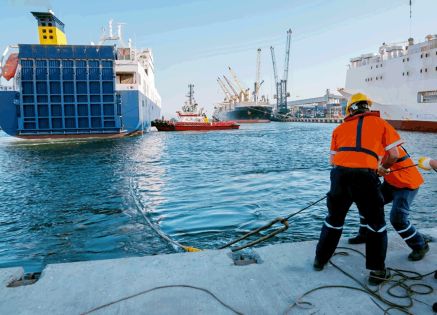
Better berth coordination helps the vessel travel more efficiently. It also reduces wasted fuel and keeps schedule planning more disciplined. For many operators, that is a more useful first step than broad slow steaming, especially when service promises still need to be met.
Speed matters, but only when it is handled properly
Blanket speed reduction can help in some trades, but it is not a complete strategy. A CII Rating improves when the ship moves at the right speed for the route, weather, draft, and cargo condition, not when every voyage is treated as if it belongs to the same formula.
That is where operators need to think in leg-by-leg terms. Some routes reward tighter speed control. Others reward cleaner arrival planning. A vessel that adjusts intelligently can protect reliability and still produce a stronger CII Rating over the year.
Fuel management belongs at the centre of the plan
No serious CII Rating strategy works without disciplined fuel control. Bunker quality, engine response, onboard practice, and review habits all affect emissions and cost. Fuel is no longer just a procurement issue. It is part of operational management.
A practical approach to marine fuel management fits naturally here because it helps operators connect daily decisions with wider business outcomes. Stronger fuel discipline improves efficiency, supports compliance, and helps teams stay ahead of future rules.
Maintenance still changes the numbers
Hull fouling, propeller condition, trim drift, and delayed cleaning rarely look dramatic in isolation. Over an annual period, though, they create real commercial damage. A CII Rating can slip because the vessel is quietly losing energy efficiency on every voyage.
That is one reason technical knowledge still matters. A team that understands the mechanics behind propulsion and onboard systems can spot losses sooner and apply the right measures. A Certificate in Ship Technology can help professionals learn the technical side more clearly and make better operational decisions.
CII makes more sense alongside other operating measures
A CII Rating is useful, but it should not be read on its own. Operators often get a clearer view when they compare it with the Energy Efficiency Operational Indicator (EEOI). EEOI helps show how a ship performs in daily transport activity, while CII turns that pattern into an annual result.
Used together, these measures show whether a vessel is becoming more disciplined or simply producing a better-looking report. That difference matters. A number can be verified, but a trend still needs to be understood.
The market is treating CII as a management signal
The IMO, the United Nations agency responsible for global maritime standards, has made decarbonisation a visible part of fleet performance. A strong CII Rating now signals something broader than rule-following. It suggests that the company can manage its assets, voyages, and operating risks with more control.
That wider shift is visible in current shipping management trends, especially around automation, fuel discipline, and smarter performance monitoring. For many shipowners, the CII Rating has become a management signal as much as a compliance score.
Different vessels feel the pressure differently
Not all vessels are exposed in the same way. A bulk carrier, a liner service, and a cruise operator carrying passengers will each face different operating conditions. Some transports run predictable loops. Others face changing demand, waiting time, and weather exposure.
The rule still applies across much of the fleet, but the operating response has to be ship-specific. One unit may need tighter arrival control. Another may need deployment review. Another may need a technical intervention. A generic answer rarely fits every vessel.
The figures leadership should review regularly
A good CII Rating is built month by month. It is very hard to rescue a poor result at the end of the year.
Leadership teams should keep a close eye on:
- fuel use per voyage
- waiting time before berthing
- distance travelled against plan
- cargo load against available capacity
- speed variation across each leg
- the gap between attained and required performance
Regular review helps ensure that problems are caught early enough to fix. It also gives managers a clearer view of what the rating is actually saying.
Where training adds value
A CII Rating sits across operations, engineering, planning, and leadership. That is why cross-functional understanding matters. When commercial teams, marine teams, and technical staff work from different assumptions, the result is usually delay and confusion.
For that reason, many professionals look at Shipping Management courses in London. The value is not only in understanding the regulation. It is in seeing how IMO’s framework, fuel strategy, voyage planning, and operating choices connect in real business settings.
Conclusion
A stronger CII Rating does not depend on one dramatic fix. In most cases, it comes from cleaner scheduling, tighter fuel discipline, better maintenance timing, and a more accurate match between the ship and the trade it serves. Those improvements reduce waste without damaging the commercial side of the voyage.
That is what makes the issue modern and practical. A good CII Rating helps operators manage cost, support compliance, and make better decisions in a market shaped by carbon pressure, regional regulations, and rising performance expectations. Companies that handle it well do not just receive a better rating. They run their ships better.