
Subscribe to our newsletter
Copyright © 2026 lmitac.com All Rights Reserved. Contact - Terms and Conditions - Privacy Policy - Quality Policy - Vacancies - Sitemap
London Maritime Academy is a trade name for London Premier Group
version: 2.9.0
Subscribe to our newsletter
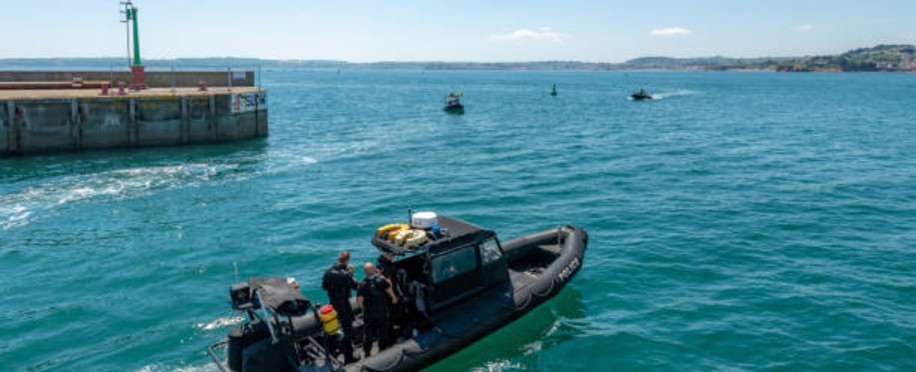
Learn the key strategies for detecting MARPOL evasion, from illegal oil and chemical discharges to garbage dumping. Explore how Port State Control, satellite monitoring, drones, and whistleblowers help ensure compliance with international maritime environmental laws.
In our previous articles, we discussed many aspects of the MARPOL Convention as a united international force. Its great importance as one of the most prominent conventions adopted by the International Maritime Organization under a global protocol is undeniable, especially for worldwide shipping, trade, and industry.
In this article, we will discuss MARPOL Evasion – its causes and the strategies used to gather evidence and uncover violations.
By definition: MARPOL Evasion refers to the illegal, deliberate act by shipowners, operators, or crew to bypass the requirements of the International Convention for the Prevention of Pollution from Ships (MARPOL), typically to avoid the costs and time associated with proper waste disposal during daily operation.
It constitutes a major violation of international maritime law designed to prevent pollution by oil, chemicals, garbage, sewage, and air emissions, with serious impact on the seas.
MARPOL Evasion involves illegal, intentional acts to bypass regulations meant to protect the marine environment. These include different types of violations:
This is the most common form of MARPOL violation, often involving the deliberate discharge of oily bilge water or sludge. For example, but not limited to:
There are many methods of deception, including but not limited to:
For example:
Among which we mention:
Now that we have examined the most prominent methods used to evade MARPOL procedures, we will look at the most prominent strategies used to investigate and gather evidence in order to uncover these violations.
Indeed, Collecting evidence of MARPOL evasion is a multi-layered process involving port state authorities, flag states, and whistleblowers. The primary responsibility for enforcing MARPOL and gathering evidence of violations falls to the Port State Control (PSC) authorities and national law enforcement agencies where the vessel is located. This responsibility is further strengthened through continuous professional development and maritime training courses in London.

1- Remote Surveillance and Aerial Monitoring
Collecting evidence of MARPOL evasion requires sophisticated, non-intrusive, and rapid monitoring technologies. Remote surveillance and aerial monitoring have become critical tools, providing admissible evidence to enforce international maritime laws by capturing violations in real-time.
Spaceborne surveillance, primarily utilizing Synthetic Aperture Radar (SAR), is ideal for large-area monitoring. SAR satellites, such as ERS-1 and Radarsat-1, are independent of cloud cover and light conditions, allowing them to detect dark, linear oil spills on the ocean surface even at night. These images are often combined with Automatic Identification System (AIS) data to identify vessels at the source of a pollution slick.
Aerial surveillance, including manned aircraft and Unmanned Aerial Systems (UAS), offers high-resolution documentation. Aircraft use sensors like Side-Looking Airborne Radar (SLAR) and Infrared/Ultraviolet (IR/UV) systems to detect oil and calculate spill volume. For air pollution (MARPOL Annex VI), drone-based "sniffers" can fly through a vessel’s plume to analyze sulfur and CO2 concentrations, allowing authorities to detect illegal, high-sulfur fuel use without stopping the vessel.
To be effective, this collected data must follow established protocols (e.g., Bonn Agreement Guidelines), providing reliable, time-stamped, and geolocated evidence. These technologies enable efficient, targeted boarding by Port State Control, transforming remote detection into actionable legal evidence.
Collecting evidence of MARPOL evasion requires a rigorous, multi-faceted approach combining thorough onboard inspections with detailed technical analysis to uncover illegal, intentional discharges, particularly regarding "magic pipes" or bypassed oily water separators (OWS).
Port State Control (PSC) inspectors and surveyors focus on physical, visual, and documentary evidence. Key strategies include Inspecting Machinery Spaces, Documentary Verification, Operational Tests and Crew Interviews.
When violations are suspected, technical analysis confirms the wrongdoing. In such cases, Sampling is a key alongside with Forensic Investigation.
Combining these strategies — auditing records, inspecting machinery, and analyzing samples — effectively identifies fraudulent activities and ensures accountability, forcing companies to move beyond superficial compliance toward a robust culture of environmental responsibility.
Collecting evidence in MARPOL evasion cases requires a meticulous forensic review of documentation, as illegal discharges are rarely witnessed directly. The primary goal is to establish discrepancies between mandatory record-keeping and actual operational reality. Forensic analysts scrutinize for inconsistencies in chronological order, missing pages, or suspiciously consistent entries.
For example, procedures include cross-referencing ORB entries with the Engine Room Logbook, Incinerator Log, and Tanker Ullage Sheets to verify if bilge water or sludge processed exceeds the oily water separator’s (OWS) capacity. Discrepancies between recorded tank levels and actual sounding data often indicate "magic pipe" bypasses. Furthermore, investigators review Bunker Delivery Notes (BDNs) to calculate fuel consumption, identifying inconsistencies between fuel used and sludge generated, which can signal illegal incineration or discharge.
Another example is that automated data from the OWS monitoring system, bridge logbooks regarding vessel speed/location, and electronic data from the VDR (Voyage Data Recorder) must be analyzed to match alleged pollution events. In cases of MARPOL Annex VI evasion, bunker fuel samples and records of scrubber operations are analyzed alongside these documents to prove the use of non-compliant fuel, ensuring a robust case against falsification.
Collecting evidence of MARPOL evasion relies heavily on Human Intelligence (HUMINT), as these acts occur in international waters, hidden from regulatory authorities. For example, Over 75% of successful prosecutions under the US Act to Prevent Pollution from Ships (APPS) stem from whistleblowers, often crew members reporting "magic pipe" incidents.
Key strategies for collecting evidence include documenting discrepancies between the oily water separator (OWS) usage and the Oil Record Book, filming illegal bypass pipes, and photographing intentional dumping. Effective whistleblowers maintain contemporaneous, detailed logs of orders, dates, and personnel involved, securing this information off-ship.
Whistleblower protection is crucial due to the immense career and safety risks involved. They are offered generous rewards. Legal protection, of course, is essential to combat retaliation. Organizations like the US Coast Guard and various NGOs provide safe channels for reporting, emphasizing that whistleblowers should act securely before, rather than after, their suspicion of wrongdoing becomes known to supervisors.
Collecting evidence in cases of MARPOL evasion has been revolutionized by advanced technology and data analytics, shifting from reactive, port-based inspections to proactive, real-time monitoring. The integration of satellite-based Synthetic Aperture Radar (SAR) and Automatic Identification System (AIS) data enables authorities to detect "dark vessels"—ships that turn off tracking to illegally dump oil or garbage.
AI-powered algorithms now process vast amounts of satellite imagery to pinpoint illegal discharges by analyzing water surface anomalies and cross-referencing them with vessel tracks. Furthermore, machine learning models analyze shipboard equipment data, such as Oil Discharge Monitoring Equipment (ODME), to identify anomalous behavior that suggests tampering. These technologies provide forensic evidence, such as SAR-detected oil slicks linked to specific vessels via behavioral patterns, which are crucial for prosecution, even when physical samples are unavailable. Consequently, technology enhances maritime domain awareness, significantly reducing the "midnight dumper" phenomenon.
With rapid technological advancements, the strategy is expected to expand to include in more detail all forms of pollution covered by the MARPOL Convention annexes, foremost among them air pollution.
It is crystal clear that laws have existed since time immemorial and will continue to exist, just as violations have. It is essential that evidence be thoroughly and transparently investigated before a final judgment is made. Laws exist to correct wrongdoing and encourage its avoidance for the benefit of humanity and the environment, which constantly reminds us to pay closer attention to it. The technological revolution undoubtedly helps in implementing the above, but the human element will always remain the cornerstone.
At LMA, we are always committed to invest in the human capital. it's obviously our basic mission. The key is for individuals to continuously develop their skills and abilities to keep pace with the current Era, and that's precisely what we facilitate through our diverse LMA Maritime Training Courses in London, Dubai, Istanbul, Athens, Amsterdam, Barcelona, Singapore, and Kuala Lumpur. Don't hesitate to register. We're always here to support you!


