
Subscribe to our newsletter
Copyright © 2026 lmitac.com All Rights Reserved. Contact - Terms and Conditions - Privacy Policy - Quality Policy - Vacancies - Sitemap
London Maritime Academy is a trade name for London Premier Group
version: 2.9.0
Subscribe to our newsletter
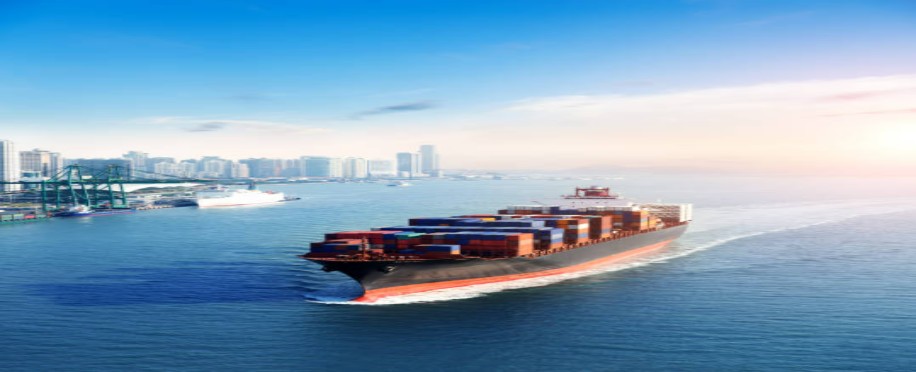
The Role of Ports in the Global Maritime Supply Chain
If your business involves getting parts, products, or raw materials from overseas—and most do—you’re part of the maritime supply chain. And if you’ve ever wondered where those chains actually connect, the answer is always the same: ports.
These are the operational heart of global trade. Every container unloaded in Hamburg, every bulk carrier docking in Houston, every car carrier arriving in Zeebrugge—these are the moments when the maritime supply chain comes alive. Without functioning ports, the whole system doesn’t just slow down. It stops.
Think of the maritime supply chain as a living circuit. Ships carry the current, but ports are the junctions where power is distributed. When a port grinds to a halt—whether from labor shortages, weather, or congestion—the ripple effect is immediate. Factories miss production deadlines. Retailers run out of stock. Hospitals face delays in medical supplies.
This isn’t theoretical. The 2021 Suez Canal blockage showed how fragile the system can be. But even smaller disruptions—like a single terminal closure—can delay thousands of containers. Why? Because the maritime supply chain runs on synchronized timing. A two-day delay at the port can turn into a two-week gap on the shelf.
Ports manage far more than just loading and unloading. They handle customs inspections, security screening, temporary storage, and handoffs to trucks and trains. A single container might pass through customs, radiation scanners, and inland logistics partners before it even leaves the terminal. If one piece fails, the whole flow suffers.
The best ports don’t just move cargo fast. They move it smoothly. That means digital systems that track containers in real time, also, it means automated gates that reduce truck wait times, and data-sharing platforms that let shippers, carriers, and rail operators plan together.
But technology alone won’t fix poor coordination. How is that? Well, the strongest ports combine smart infrastructure with experienced teams—people who understand international regulations, vessel scheduling, and risk management. They know that efficient operations aren’t about speed alone. They’re about predictability.
And predictability builds trust. In an era of just-in-time manufacturing, companies can’t afford surprises. They need to know when their goods will clear customs, when they’ll hit the rail yard, and when they’ll reach the warehouse. Ports that deliver that certainty become preferred partners in the maritime supply chain.

Risk is built into global trade. Geopolitical tensions, extreme weather, cyberattacks, labor disputes—any one can trigger major disruptions. The maritime supply chain is only as strong as its ability to absorb shocks.
That’s why modern ports are designing for flexibility. More storage capacity. Backup power systems. Alternative routing plans. Stronger collaboration with inland carriers. True resilience means not just recovering from a crisis—but anticipating it.
This is especially crucial as the global economy faces new pressures. Energy costs are shifting container shipping routes. Nearshoring is changing cargo volumes. Climate regulations are pushing ports to adopt cleaner equipment. The maritime supply chain must adapt—and ports are leading that shift.
How do you think every smooth operation of this industry happens? Behind it lies a very intricate team of professionals who master the challenges of global logistics. Who are they? Supply chain managers, port planners, customs brokers, these are the ones who ensure cargo not only moves but does so securely, legally, and on time.
For these reasons, specialized education is increasingly important. Programs that are focused on components like maritime logistics or port management, and supply chain resilience are armouring the next generation with real-world skills.
Nevertheless, the key advancements is in the hands of the non-theoretical courses. The ones that teach students how to navigate intricate customs, manage disruptions, and align advanced operations across borders.
For working professionals, this knowledge is crucial. In the volatile trade environment of today that relies heavily on innovation, understanding the full maritime supply chain—from ocean routes to inland transportation—is what separates reactive teams from strategic leaders.
How will you get this crucial knowledge? Well, LMA offers globally accredited courses across London, Dubai, Barcelona, Athens, Istanbul, Kuala Lumpur, Singapore, or Amsterdam. With our new Maritime Logistics courses in London, we teach you everything you need to know, and more.
The maritime supply chain will keep evolving. Automation, green energy, AI-driven forecasting, and digital freight platforms are all reshaping how goods move. But through every change, ports remain the critical hubs.
They connect deep-sea vessels to rail lines, highways, and inland waterways and moreover serve as the primary gateway of movement for international shipping and local economies. And ever soincreasingly, they’re expected to lead on sustainability—reducing emissions, cutting waste, and supporting sustainable trade.
So the next time you see a cargo ship, remember how they're a complex link in the largest logistical networks worldwide. And the port it’s heading to? That’s where the maritime supply chain proves its worth—quietly, reliably, and without fanfare.
Because in the end, global trade doesn’t run on algorithms. It runs on ports that work.
Smart and Green Ports


