
Subscribe to our newsletter
Copyright © 2026 lmitac.com All Rights Reserved. Contact - Terms and Conditions - Privacy Policy - Quality Policy - Vacancies - Sitemap
London Maritime Academy is a trade name for London Premier Group
version: 2.9.0
Subscribe to our newsletter
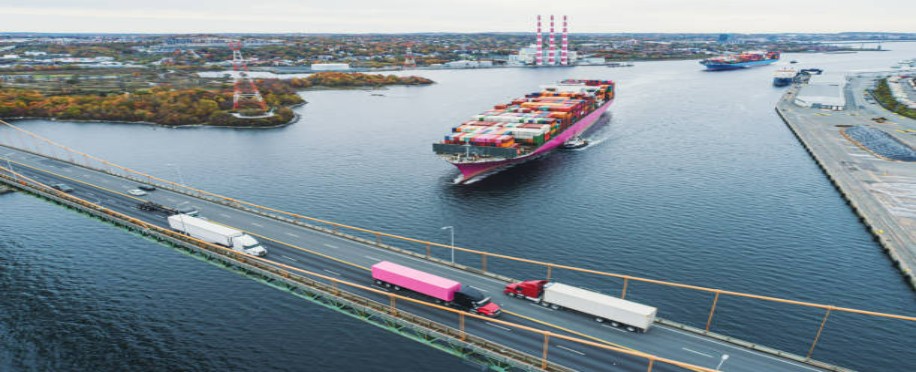
Smart Containers - a paradigm shift from traditional shipping to data-driven control
Shipping containers have been an integral part of traditional shipping since their emergence and widespread adoption, which revolutionized the maritime sector in the mid-20th century. Before the container era, goods were typically transported as bulk cargo, meaning each item was individually loaded, stowed, and unloaded.
The standardized size and stack-ability of containers enabled the mechanization of ports, significantly reducing handling duration, labor costs, and cargo damage. This efficiency revolutionized logistics and global supply chains, making shipping more reliable and cost-effective. The history and continued use of containers form the foundation of much of modern global trade.
With the technological revolution that has permeated all aspects of life, containers have not been an exception; on the contrary, they have demonstrated remarkable adaptability to current trends.
The shift from traditional shipping to a data-driven, control-oriented ecosystem is driven by the integration of Internet of Things (IoT) technologies into standard containers, transforming them into "smart containers". This enables real-time monitoring and advanced data analytics, fundamentally changing supply chain management.
Smart containers are standard shipping containers outfitted with Internet of Things (IoT) technology, sensors (GPS, temperature, humidity, shock), and connectivity to provide real-time, end-to-end visibility and control over cargo and location throughout the supply chain, enhancing security, efficiency, and predictability for shippers, logistics providers, and port authorities, enabling smart shipping solutions. They transmit live data to digital platforms, enabling automated monitoring, condition regulation (for reefer containers), and informed decision-making, transforming traditional logistics into a more transparent and optimized process.
As mentioned previously, this data-driven approach offers significant advantages compared to traditional shipping methods, including but not limited to:
Shippers gain end-to-end visibility into their cargo's journey, allowing for proactive management and immediate response to disruptions.
Real-time monitoring of location and door status significantly reduces the risk of cargo theft and ensures regulatory compliance.
Data analytics help optimize routes, reduce dwell times in ports, and streamline logistics operations, enhance performance, support sustainable practices, and offer cost savings.
Constant environmental monitoring prevents spoilage or damage to sensitive goods, reducing insurance claims and product loss.
Data insights allow operators to identify potential equipment failures before they occur and reach higher fleet reliability.
The essential technologies used in smart containers include:
This core technology connects the containers to digital systems, enabling devices to collect and transmit data over the internet in real-time, even when in the middle of the ocean.
Various sensors are embedded to monitor internal and external conditions. These include:
Provides real-time visibility into the container's exact location globally, enabling better route optimization and forecast of arrival (ETA) predictions.
To measure critical parameters like temperature, humidity, pressure, and light exposure, which is vital for sensitive or perishable cargo.
Door open/close detection, shock/vibration sensors, and smart locks to prevent and alert for unauthorized access or mishandling.
Data collected by sensors is transmitted via global GSM roaming, satellite communication, and increasingly, 5G networks, to ensure reliable and fast communication between the container and control centers.
The transmitted data from IOT devices is sent to a secure, centralized cloud platform. This data is processed using machine learning and AI algorithms to provide enhanced actionable data-driven solutions, such as predictive maintenance needs, optimized routes, and accurate estimated arrival times (ETA).
To ensure continuous operation, smart containers are often self-powered using long-life batteries or small solar panels affixed to the container's exterior.
In some advanced applications, blockchain provides a secure, transparent, and tamper-proof ledger for recording sensor data and transactions, enhancing trust among the various stakeholders (customs, shippers, banks, etc.).

The transit is about more than just technology; it is a change in the operational model:
Traditional shipping involved reacting to problems after they occurred (e.g., discovering damaged goods at the destination). Smart containers enable proactive intervention (e.g., rerouting a container around an unexpected port closure or adjusting a reefer's temperature remotely).
The "black box" nature of traditional shipping is eliminated. Stakeholders can access real-time information, fostering trust and collaboration across the supply chain.
Many processes that once required manual checks (e.g., checking temperatures, locating containers in a yard) are now automated and accessible via digital platforms.
There are several challenges when adopting Smart Containers in the maritime industry:
The sophisticated sensors and communication technologies in smart containers require a considerable initial investment cost compared to traditional containers, and their performance can be affected by environmental conditions, which can be a barrier to adoption for smaller companies.
The absence of universal standards for data formats and sharing protocols makes it difficult to integrate data seamlessly across different transportation modes and multiple stakeholders (ports, customs, shipping lines, etc.).
Smart containers transmit sensitive data via cloud services and satellite networks, making them potential targets for hacking and data tampering. Robust security measures and regulatory compliance are critical to protect this information.
The thick steel construction of containers and the conditions at sea can interfere with sensor functionality and data transmission. Ensuring reliable, long-distance communication requires a robust worldwide network infrastructure.
Many older logistics networks and port infrastructures require significant adjustments to connect with modern IoT technology, raising security concerns and leading to future integration issues and additional costs.
The shift towards automation and data-driven management requires upskilling current employees to manage and interpret the data from smart technologies, with support from a maritime training provider.
A key business challenge has been the reluctance of customers to pay for the additional service provided by smart containers, which affects carriers' ability to justify the internal return on investment (ROI).
Standards for data sharing, customs integration, and battery technology are still evolving, leading to regulatory uncertainty across different countries and jurisdictions.
There’s a growing trend toward automation in all aspects of life in general, and strategic operations in particular, delivering clear benefits and supporting long-term growth, and that’s perfectly natural. The train of technology has left the station and it won’t stop anytime soon, so don't hesitate to learn how to adopt more practical and efficient approaches that expand operational capabilities.
At LMA, we’re committed to enhancing your professional capabilities by equipping you with everything you need to ride the wave of smart containers in the maritime sector.
Feel free to explore our LMA Maritime Training Courses or request a customized course, and book your ticket into the industry's future, whether you are in London, Dubai, Athens, Istanbul, Amsterdam, Barcelona, Singapore, or Kuala Lumpur.


