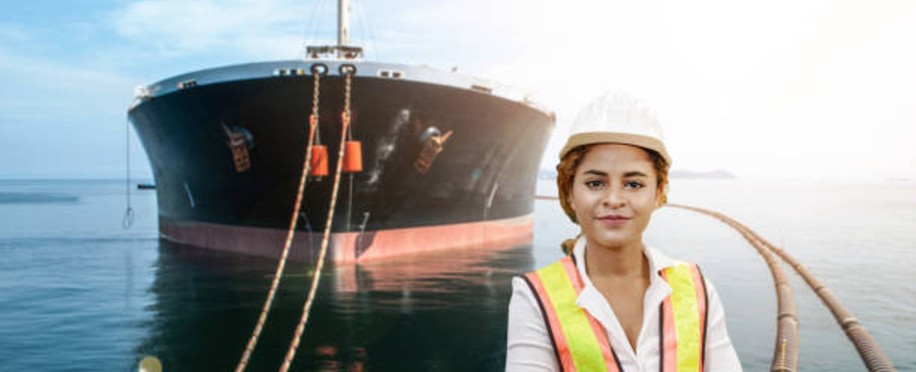
Shipping depends on disciplined decision-making, operational resilience, and trusted leadership under pressure. Yet in many organizations, the leadership pipeline narrows long before talent reaches executive authority. Women in Shipping examines how career pathways, commercial access, operational design, and governance structures determine who ultimately holds power across vessels, ports, logistics networks, and trading desks.
This article explains where the leadership funnel narrows, what research shows about structural barriers, and what executives can practically adjust to strengthen retention, safety, and long-term decision-making capacity.
What the data says in 2026
We start things off with a question: Are there really women in shipping? And if yes, what are they doing?
Although the number of women in Shipping jobs does not fail at entry, they definitely narrow at higher levels.
According to the International Maritime Organization (IMO) and BIMCO/ICS data, women in maritime account for around 1–2% of global seafarers. Whereas The IMO–WISTA Women in Maritime Survey 2024 places women at just under 19% of the sampled maritime workforce ashore.
However, UNCTAD reports that only about 5% of the highest management positions in participating companies were held by women.
Authority Zones: Where Leadership Forms
According to UNCTAD Review of Maritime Transport 2025, Chapter 4; Senior talent in Women in Shipping usually comes through three routes: sea-to-shore operations, commercial trading and chartering, and technical or regulatory transformation. The success factor is early authority over risk, money, or delivery — not support-only work.
Sea-to-shore progression often follows watchkeeping → HSQE → fleet performance → vessel management. It works when women’s seatime is treated as leadership experience and rotations are planned with clear criteria.
Commercial routes accelerate when women control decisions: negotiating charter party terms, learning trading discipline, and owning outcomes. Sponsorship matters because it grants access to deals and customer events where readiness is visible.
But the bottom line remains:
Because senior executives typically emerge from these authority zones, progression depends less on entry and more on access to decision rights.
Therefore, if women remain concentrated in administrative or support functions, executive representation will remain limited.

How Leadership Pathways Actually Work
Women in Shipping does not fail because of capability. It fails because pathways are inconsistently structured.
1. Sea-to-Shore Operational Authority
Women who serve on board vessels build technical credibility. However, progression depends on whether that sea experience converts into decision-making authority ashore.
In countries such as Norway, maritime initiatives deliberately create rotational frameworks to retain female officers through mid-career stages.
Without structured transitions into fleet management, safety governance, or transformation roles, women exit the sector.
2. Commercial Trading & Revenue Control
Commercial trading desks determine profitability. Freight negotiation, contract structuring, and chartering decisions are power centers in shipping.
Yet commercial trading environments often remain relationship-driven and male-dominated. Informal association networks, client events, and negotiation rooms still favor legacy access patterns.
When women control trading portfolios as part of gender balance in maritime, revenue exposure accelerates leadership progression dramatically.
3. Technical & Transformation Leadership
Whereas the human element in shipping is the main part of it, it is actually undergoing a technological transformation: automation, digital compliance, carbon reporting, and ESG governance.
These transformation projects create leadership opportunities across maritime and logistics systems.
Women in Shipping expands when women are appointed to lead sustainability frameworks, digital implementation, and regulatory compliance programs rather than confined to administrative functions. Transformation periods reward capability over tradition.
Structural Barriers That Still Constrain Women in Shipping
Historically, male sectors tend to reinforce informal gatekeeping. Promotions flow through trust networks built over years of shared operational experience.
The Global Maritime Forum highlights that psychological safety challenges persist at sea, affecting the retention of female crew and officers.
Diversity initiatives without measurable accountability rarely alter progression patterns.
- Harassment & Governance Risk
Harassment remains a documented retention risk in maritime environments.
The International Labour Organization and IMO strengthened frameworks addressing violence and bullying at sea, signaling regulatory seriousness. In fact, since 1 January 2026, joint IMO–ILO work on seafarer issues has mandated STCW training on preventing and responding to violence and harassment:
Operations and equipment: small design choices, big attrition
When we take a step back from the bigger issues, we notice there’s also a line of smaller day-to-day issues that may hinder the way women work in shipping.
When basics fail — facilities, safety gear, day-to-day friction — Women in Shipping loses talent quickly.
The All Aboard Alliance report on four key challenges facing women seafarers, based on interviews with 115 women, highlights pain points tied to physical conditions onboard, employability, social relations, and safety.
For Women in Shipping, procurement becomes a safety control. If the ship, terminal, or shipyard shop issues one cut of clothing, limited sizes, and generic boots and shoes, women may compromise protection.
The International Seafarers’ Welfare and Assistance Network (ISWAN) notes operators rolling out women-specific PPE as a practical lever.
Standard issue should be safe and stylish, including female everyday wear — tops, pants, cover pieces, and where appropriate, dresses — without forcing one “male” style.
Making Women in Shipping Measurable
Women in Shipping must be governed like any other strategic priority.
Executive dashboards should include:
- Hiring across shipping sectors
- Promotion velocity in trading and technical roles
- Attrition after maternity or long travel assignments
- Harassment reporting resolution time
- Representation in transformation projects
The seventh metric should be clear and visible: time-to-resolution for complaints.
Capability gaps can be addressed through structured development. Targeted programmes, including Shipping management training courses in London, can strengthen commercial readiness and governance capacity among emerging female leaders.
Strategic Relevance for the Industry
Shipping today faces decarbonisation pressure, let alone the geopolitical trade shifts, logistics volatility, and workforce shortages.
Women who go into leadership with good management training can directly influence talent sustainability in an international sector undergoing transformation because women's styles of leadership will always support more woman-based initiatives.
And as such, organizations that align diversity, safety, and leadership governance strengthen resilience. Those who ignore structural barriers risk talent leakage in an already constrained workforce.
Conclusion
Women in Shipping is about leadership infrastructure.
The barriers are not individual ambition. They are embedded in commercial gatekeeping, cultural dominance, operational design, and governance oversight.
Shipping organizations that redesign pathways, equip female crew properly, formalize accountability, and connect networks to authority will build stronger leadership systems.
In a transforming maritime industry, inclusion is no longer symbolic. It is a structural strategy.