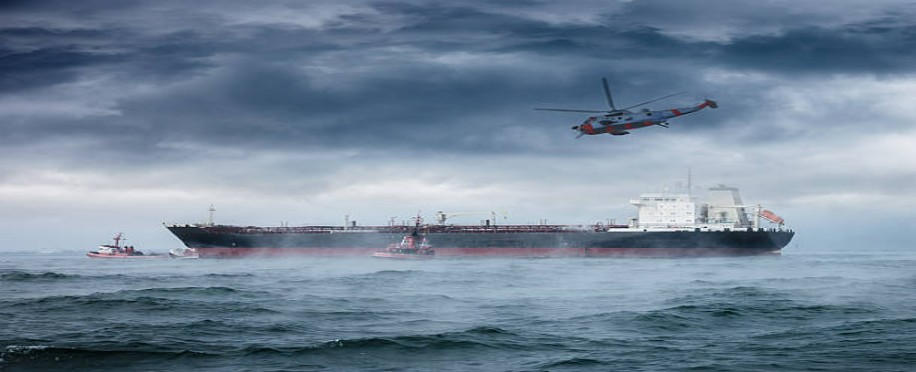
Maritime Emergency Response (MER) has become the first line of defense in a world increasingly plagued by transportation and maritime incidents and complexities, where mere seconds can mean the difference between survival and disaster.
With the increasing frequency of maritime emergencies, professionals understand that a lack of training means an inability to make critical rescue decisions during rapidly escalating emergencies.
Therefore, advance preparation, understanding response protocols, and identifying best practices in preparedness have become an indispensable professional necessity, especially given the growing risks to ships, navigation crews, and the marine environment.
Why has maritime emergency response training become essential after the Kayo incident?
Real-life incidents prove that maritime response is no longer optional.
The severe leak on the Kayo vessel confirmed that any sudden emergency in maritime transportation can turn into a disaster if ships crews are not trained in maritime emergency response.
The ship's 15-degree listing, the water leak, and the strong winds would not have ended safely without coordinated responses between Malaysian and Vietnamese agencies, who utilized effective communication protocols that contributed to the crew's rescue.
Dealing with Spills and Environmental Disasters.
Without a doubt, the rapid response in the Kayo situation prevented environmental disasters that could have threatened large areas.
Thus, maritime emergency response training equips professionals with the skills to use effective essential protocols to stop spills, control the situation, and activate integrated support plans.
Coordination between Agencies to Ensure Successful Rescues
The training enables participants to communicate immediately with maritime agencies and activate coordinated rescue operations based on standardized contact and response plans.
In this context, the Kayo incident was a clear example of the success of coordinated communication, which led to the rescue of 15 people and their safe transfer to shore.
The Need for Effective Plans and Preparedness Before a Danger Strikes.
The situation on the Kayo demonstrated that having a clear plan and implemented preparedness procedures helped control the situation until the arrival of specialized teams.
Maritime Emergency Response training ensures that every individual on board knows their role in the event of an emergency.
The Role of Training in Supporting Crews During Major Maritime Disasters
Maritime Emergency Response Training (MERT) programs teach crews how to guide operations, manage risks, and implement procedures that save lives and minimize losses.
These skills enable rescue teams to cope with weather conditions, high waves, and sudden drops in ship stability.

Essential Skills Trainees Acquire in MET.
Managing Drowning and Spilling Incidents
Of course, trainees learn to manage drowning emergencies, control floodwater, and operate emergency pumps.
These skills were crucial in the Kayo incident, where large quantities of water flooded the vessel.
Handling Ship Fires and General Cargo Ship Accidents
These are among the most dangerous scenarios at sea. Therefore, training includes firefighting protocols on board cargo ships, operation of fire suppression systems, and crew evacuation.
This knowledge empowers personnel to better protect themselves, cargo, and the environment.
Maritime Search and Rescue Operations
Training relies on practical exercises to manage rescue activities at sea using charts, signals, and communication techniques.
These skills are applied precisely as demonstrated in the rescue of the Kayo crew.
Handling Mechanical and Engine Failures
Participants learn fault analysis, marine mechanical first aid, and the operation of emergency systems.
In the Kayo emergency, the crew's ability to maintain stability before help arrived was crucial.
Coordination with International Rescue Agencies and Maritime Legislation
Through maritime emergency response training trainees learn how to work with international agencies and coast guards, and how to implement global emergency response protocols.
The training also includes programs such as Maritime Training Courses in London to build advanced expertise in this field.
How does Maritime Emergency Response enhance your career and increase your opportunities?
Increased job prospects in the international maritime sector
Experience in Maritime Emergency Response is one of the most sought-after skills in shipping companies and international emergency centers.
Those with this experience are given priority for employment because they are able to protect investments and lives.
The ability to navigate vessels in the most challenging conditions
Training enables you to understand internationally recognized procedures and implement effective responses to any sudden malfunction.
This makes specialists more confident and professional at sea.
Protecting the marine environment from disasters
The loss of industrial materials or oil at sea can cause massive disasters.
So, through maritime emergency response training, specialists learn to mitigate the damage from spills and prevent disasters, working to protect the marine environment.
Developing the ability to communicate effectively during crises
Training enhances effective communication skills among crews, ports, and international organizations.
This skill was fundamental to the success of the Kayo rescue operation.
Accurate implementation of emergency plans and saving lives
Ultimately, the primary goal of Maritime Emergency Response is to protect human life.
Skill in executing procedures and rescuing crews is what drives the value and salaries of specialists globally.
In Conclusion,
In a world filled with maritime hazards, Maritime Emergency Response (MER) is becoming an essential skill for anyone working at sea or managing maritime transport operations.
Whether you are in London, Dubai, Barcelona, Athens, Istanbul, Kuala Lumpur, Singapore, or Amsterdam, London Maritime Academy (LMA) Training delivers internationally accredited Maritime Training Courses designed to meet your local and global needs, supported by flexible educational methods.
Start your career journey with confidence—join our Maritime Emergency Response Training programs to become part of the generation capable of handling emergencies, applying effective protocols, coordinating with international agencies, leading coordinated responses, and protecting lives and the environment in major maritime disasters across the sea.