
Subscribe to our newsletter
Copyright © 2026 lmitac.com All Rights Reserved. Contact - Terms and Conditions - Privacy Policy - Quality Policy - Vacancies - Sitemap
London Maritime Academy is a trade name for London Premier Group
version: 2.9.0
Subscribe to our newsletter
Posted On: 1/20/2026, 11:53:41 AM
Last Update: 1/20/2026, 11:53:41 AM
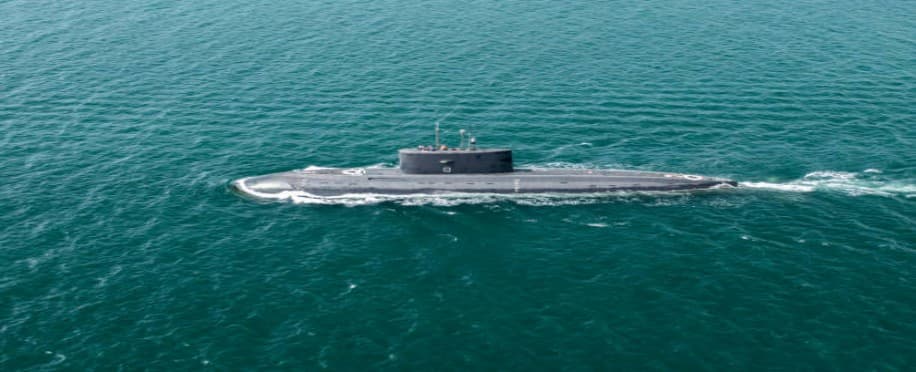
China is the world's second-largest operator of nuclear-powered submarines, with 32 active units, surpassing Russia, which has 25 to 28 operational submarines.
Globally, the U.S. has the largest nuclear submarine fleet operating 71 submarines as of December 31, 2025, including fast-attack, ballistic missile, and guided missile submarines.
China is rapidly constructing submarines and warships, enhancing its presence and influence in the Indo-Pacific region. Its submarine fleet comprises attack variants, guided-missile submarines, and ballistic submarines, signifying a developing undersea force.
The core of the submarine fleet consists of nine Type 093 and 093A Shang-class nuclear-powered attack submarines, which are capable of handling multiple mission assets.
Additionally, China possesses the Type 093B guided-missile submarine, which can deploy cruise missiles using vertical launch systems.
There are about sixteen Type 093B hulls, many of which are in use, while others are being built or tested. Currently under construction worldwide, this is the largest class of nuclear submarines.
China's maritime nuclear deterrent comprises nine Type 094 and 094A Jin-class ballistic missile submarines, which are armed with JL-2 and the newer JL-3 submarine-launched ballistic missiles.
Besides, China is developing two new submarine classes: a Type 095 nuclear attack submarine is currently being assembled, while the construction of the first Type 096 ballistic missile submarine is reportedly underway.

Next-gen submarine designs are projected to enhance stealth, range, and survivability, increasing China's active nuclear submarine fleet to 32 by 2026, not including those currently under construction.
Russia ranks third in active hulls, possessing Borei-class ballistic missile submarines, Yasen and Yasen-M guided-missile submarines, in addition to older platforms.
The U.S. Navy has a slow manufacturing line, notwithstanding its continued numerical superiority.
In April 2025, the USS Lowa was put into service; later that year, the USS Massachusetts and USS Idaho were both put into service, both in 2026.
Workforce shortages and logistical difficulties have made it difficult for US production to keep up a steady pace.
However, China is building numerous hulls at the same time, and if this trend continues, it may potentially surpass the United States.
Beijing aims to outpace the United States by 2035 by expanding its naval fleet throughout the 2030s, focusing on strategic deployment in volatile regions such as the South China Sea, to boost its naval footprint, which has unnerved Washington.
In the Indo-Pacific, the United States is concentrating on anti-submarine operations and forward presence. A key component of this strategy is the AUKUS collaboration.
To keep China in check, the United States and the United Kingdom are periodically stationing their nuclear submarines in Australia.
At the Maritime Professional Training, attendees learn about nuclear submarines, including the science, engineering, operation, and safety management of naval nuclear propulsion plants. This multidisciplinary field focuses on the theoretical and practical aspects of developing, maintaining, and operating these modern boats.


