
Subscribe to our newsletter
Copyright © 2026 lmitac.com All Rights Reserved. Contact - Terms and Conditions - Privacy Policy - Quality Policy - Vacancies - Sitemap
London Maritime Academy is a trade name for London Premier Group
version: 2.9.0
Subscribe to our newsletter
Posted On: 1/15/2026, 9:31:36 AM
Last Update: 1/15/2026, 9:31:36 AM
Japan has initiated a significant deep-sea trial to secure rare earth minerals, driven by concerns over China's dominance of these essential materials for modern industry and defense.
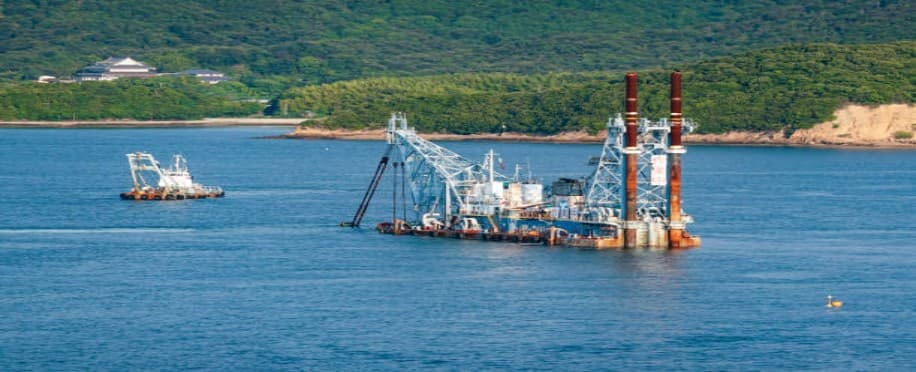
The scientific drilling vessel 'Chikyu' departed from Shimizu Port in Shizuoka, heading towards waters near Minami Torishima, located about 1,900 km southeast of Tokyo.
Importantly, the month-long mission will be the first attempt globally to continuously extract rare earth-rich mud from the seabed at depths of approximately 6,000 meters.
This trial represents Japan's initial effort to produce rare earths domestically amid strained relations with China and tightened export controls on civilian and military use items.
China has halted exports of certain dual-use items to Japan, raising concerns in Tokyo over potential supply disruptions, particularly regarding rare earths, in which China is the leading global supplier. The Japan Agency for Marine-Earth Science and Technology (JAMSTEC) is in charge of this government-backed project.
According to programme officials, the objective is to create a reliable supply chain for minerals that are necessary for sectors including electronics, automotive production, renewable energy, and defence.
Besides, the waters around Minami Torishima, located within Japan's exclusive economic zone, are estimated to contain over 16 million tonnes of rare earth elements, making it one of the largest known reserves in the world.
The deposits consist of heavy rare earths like dysprosium and yttrium, crucial for high-strength magnets, electric vehicles, lasers, and other advanced technologies.
Notably, Japan's reliance on China for rare earths, particularly heavy ones, raises concerns for key industries, especially the automotive sector.
At the Maritime Training Courses in Dubai, deep-sea rare earth mining is examined for its environmental impacts, extraction technology and economics, governance and regulation, and socio-economic aspects. Key topics include biodiversity loss, sediment plumes, the balance of critical minerals against circular economy solutions, and their relation to the net-zero transition.

Japan has stockpiled rare earths since a 2010 supply disruption, but officials recognise that stockpiles cannot entirely secure the country against long-term shortages.
Since 2010, Japan has decreased its dependence on China for rare earth imports from approximately 90% to 60% through overseas investments, partnerships with Lynas Rare Earths in Australia, expanded recycling efforts, and advancements in manufacturing methods requiring fewer rare earth materials.
Furthermore, economists believe that producing rare earths in Japan is the most reliable long-term solution, though they caution that domestic production may be challenging, particularly if China broadens its export controls to additional materials.
The Minami Torishima project is a long-term initiative, with the Japanese government investing approximately ¥40bn ($250m) since 2018. No reserve estimates or production targets have been announced, but a larger mining test is scheduled for February 2027 if the current trial succeeds.
Subsequently, deep-sea mining of rare earth-rich mud, once deemed impractical due to high costs, may become viable due to increasing supply pressure from China and rising prices.
Ultimately, China is monitoring Japan's activities, particularly in response to survey work near Minami Torishima last year, where Chinese naval vessels operated nearby. Beijing claims its actions comply with international law and urges Japan not to overstress security concerns.
Finance ministers from the Group of Seven industrialised nations will discuss rare earth supply security at a meeting in Washington this week.


