
Subscribe to our newsletter
Copyright © 2026 lmitac.com All Rights Reserved. Contact - Terms and Conditions - Privacy Policy - Quality Policy - Vacancies - Sitemap
London Maritime Academy is a trade name for London Premier Group
version: 2.9.0
Subscribe to our newsletter
Posted On: 1/8/2026, 7:55:52 PM
Last Update: 1/8/2026, 7:55:52 PM
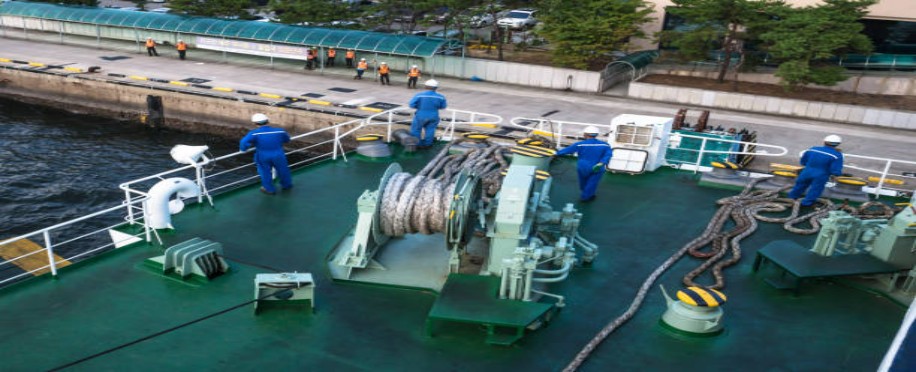
Qingdao Port, the largest port in Northern China, has adopted Beijing's first vacuum-based automated mooring technology, enabling ships to dock in 30 seconds without physical labour. This system became operational on January 1, 2026.
On Thursday, a system using suction pads and 13 mooring modules successfully anchored a 366-metre, 16,000-TEU vessel, generating 2600 kilonewtons of holding force. This technology improves efficiency and safety by reducing mooring time from 30 minutes to just 30 seconds.
With innovative customs technology, Qingdao Port, which already leads the world in automated terminal performance, keeps improving operations.
After Shandong Port Group (SPG) introduced China's first vacuum-based automated mooring system, which reduced the time required to secure the largest containerships in the world alongside, Qingdao has emphasised its position as a worldwide port technology bellwether.
A 366-metre-long containership can now moor in 30 seconds instead of 30 minutes at Qingdao port due to a new system using 13 vacuum mooring units that generate a total suction force of 2,600 kN, allowing vessels to be securely held against the quay without conventional mooring lines.
The technique represents a significant safety improvement in addition to speed. The device removes workers from the so-called snap-back zone, where line failure under tension can result in deadly injuries, by removing the requirement for crew and dockworkers to handle heavy lines.
Additionally, the automated setup has a real-time monitoring framework that continuously monitors current, wind, and wave conditions, allowing for intelligent active stabilisation control and automated hover suction.
Maritime Courses in London address vacuum mooring systems that dock ships in 30 seconds, detailing their underlying technology, components, operation, integration with AI and electric charging, and vessel type applications. Also, the seminar features industry leaders such as Cavotec's MoorMaster and Trelleborg's AutoMoor, which use ropes to shorten turnaround times and reduce environmental impact.

According to SPG, the method will save over 200 hours of mooring time yearly, increasing berth productivity by about 10 extra ultra-large vessels every year.
The implementation expands upon Qingdao's extensive history of being a leader in port automation and digitisation. With AI-driven scheduling, automated guided vehicles, and remote-controlled quay cranes already regular features, the port runs some of the most cutting-edge, completely automated container terminals in the world.
Meanwhile, Qingdao has led the way in smart energy management, 5G-enabled port operations, and the widespread application of digital twins to maximise terminal performance.
In simple terms, due to its constant emphasis on technology, Qingdao has established itself as a global leader in next-generation port operations, frequently hosting delegations from other countries eager to learn about its automation approach.
Read more news:


