
Subscribe to our newsletter
Copyright © 2026 lmitac.com All Rights Reserved. Contact - Terms and Conditions - Privacy Policy - Quality Policy - Vacancies - Sitemap
London Maritime Academy is a trade name for London Premier Group
version: 2.9.0
Subscribe to our newsletter
Posted On: 12/18/2025, 8:30:30 PM
Last Update: 12/18/2025, 8:30:30 PM
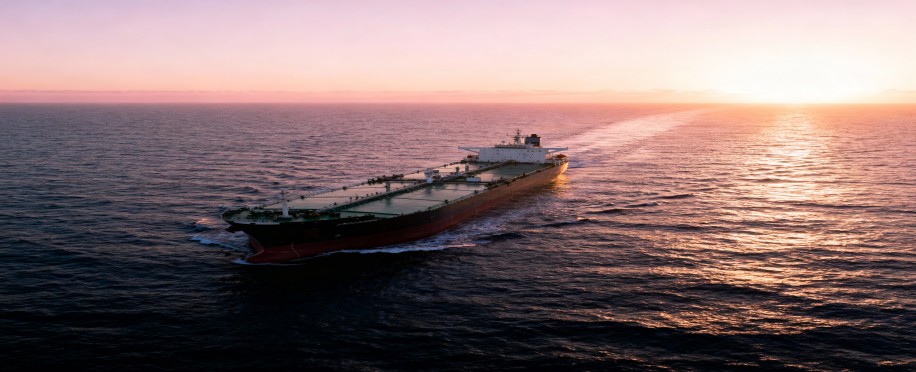
Norway's Odfjell Group has launched the first operational green shipping corridor between Brazil and Europe, focusing on the seaborne transportation and storage of chemicals and speciality bulk liquids.
Significantly, Odfjell has initiated a new programme using certified sustainable biofuel, aimed at setting a benchmark for deep-sea decarbonisation, demonstrating the availability of low-carbon solutions.
The company's fleet includes around 70 ships trading globally and operates four tank terminals at key international hubs.
Norwegian players’ chemical tankers are now navigating the 5,000-nautical-mile route between Brazil and Europe, significantly reducing emissions. The corridor will facilitate 12-15 annual voyages, each lasting approximately 40 days, marking a significant step towards zero-emission shipping.
Moreover, the company has secured a long-term supply of B24 sustainable biofuel in Rio Grande. The Ports of Antwerp, Rotterdam, and Rio Grande are collaborating to enhance the efficiency of the green corridor and optimize port-stay processes.
Harald Fotland, CEO of Odfjell, emphasised that the availability of certified fuel, technology, and infrastructure showcases sustainable biofuel as a practical option for deep-sea shipping at present.
Further, he added that, with this initiative, we are incorporating greener fuel into our decarbonisation strategy and engaging stakeholders to decarbonise operations across the value chain.
At the Maritime Training Courses in Dubai, participants discuss Green Corridors in shipping, emphasising a cooperative ecosystem for alternative fuels like ammonia and methanol. Discussions on maritime decarbonisation focus on infrastructure, vessel technology, regulation, finance, and operational efficiency, considering environmental, economic, and technological concerns.

The Norway-headquartered company asserts it has independently self-funded a project to enhance a green shipping corridor. It plans to collaborate with ports for efficiency, customers for capacity utilisation, and fuel providers to increase the availability of green fuels.
“By covering the additional cost ourselves, we eliminate the financial element and move directly into operational implementation. It may not be a perfect corridor yet, but it's a solid start. Its success depends on collaboration across the value chain, and we are committed to developing it further together with relevant stakeholders,” Fotland stated.
The so-called certified B24, a mixture of 76% VLSFO and 24% renewable biodiesel made from waste, is thought to be the best sustainable biofuel currently available in Brazil.
Notably, the most recent project builds on the 2024 Norway-Brazil memorandum of understanding (MoU) to create a green transatlantic shipping route and is in line with the IMO's 2030 aims and the EU's Fit for 55 aspirations.
Since Odfjell has already improved its carbon intensity by more than 54% in comparison to the 2008 benchmark through various technological and operational initiatives, the introduction of biofuel is viewed as another step in the company's ten-year effort to reduce emissions.
Fotland underscored, “We hope to inspire broader industry action and welcome continued collaboration with regulators, ports, producers, other ship operators, and customers to accelerate the transition to low-emission maritime transport.”
Earlier this year, Odfjell's Bow Olympus chemical tanker crossed the Atlantic using a combination of wind-assisted propulsion and a certified sustainable 100% biofuel, which was thought to demonstrate how current fuels and technologies could be combined to speed up deep-sea shipping's shift to net-zero emissions.


