
Subscribe to our newsletter
Copyright © 2026 lmitac.com All Rights Reserved. Contact - Terms and Conditions - Privacy Policy - Quality Policy - Vacancies - Sitemap
London Maritime Academy is a trade name for London Premier Group
version: 2.9.0
Subscribe to our newsletter
Posted On: 3/11/2026, 11:01:18 AM
Last Update: 3/11/2026, 11:01:18 AM
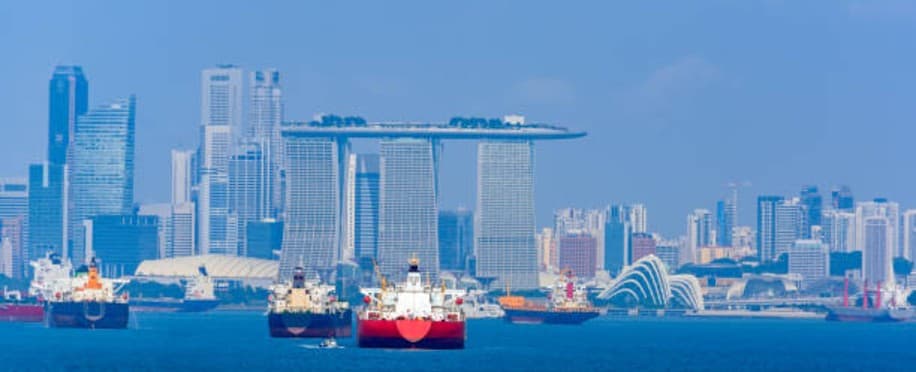
In an increasingly complicated global operating environment, Singapore is creating a comprehensive Maritime Singapore Master Plan to direct the country's long-term maritime policy.
Significantly, Singapore's Maritime and Port Authority (MPA) has initiated a plan to enhance the nation's growth, solidify its significance in global trade, and promote innovation, technology adoption, and workforce development.
Scheduled for release in 2027, the Master Plan will be an industry-wide blueprint influencing business planning, investment priorities, and talent strategies in the maritime ecosystem.
The Master Plan aims to strengthen Singapore's global hub port competitiveness and enhance its international maritime centre status, emphasising the expansion of capabilities in maritime technology, artificial intelligence, and research and development.
MPA and the Ministry of Transport will engage in extensive consultations with businesses, stakeholders, and the public to align the plan with industry needs. Additionally, a dedicated industry panel of senior business leaders will be formed to offer insights into emerging opportunities and challenges.
A major component of the Master Plan is talent development, with the MPA launching the Maritime Cluster Fund – Global Rotation (MCF GR) to enhance Singapore's maritime leadership. This initiative aims to co-fund overseas postings for local middle managers, providing them with exposure to international operations and multicultural leadership.
In parallel, MPA is improving the Maritime Cluster Fund – Management Associate (MCF MA) scheme to facilitate company participation. The updated scheme will enable structured rotations for young professionals in commercial and operational roles, enhancing their understanding of the maritime value chain and career progression.

Under the Maritime Cluster Fund – Business Development (MCF BD) programme, MPA will provide an innovation track to strengthen Singapore's standing as a hub for maritime innovation. The goal of this track is to entice marine corporations to establish their corporate venture capital units, product teams, and innovation leaders in Singapore.
In addition to offering access to R&D resources, regulatory sandboxes, and co-funding for innovative initiatives, the programme will co-fund qualifying expenses such as key personnel salaries and rent. This strategy encourages businesses to integrate their innovative capabilities into the local maritime ecosystem in addition to establishing a presence in Singapore.
Moreover, MPA is promoting the use of unmanned surface vessels (USVs) in port operations. Two applications—AI-enabled surveillance for improved navigating safety and more effective hydrographic surveys in difficult areas—will be the subject of expanded testing starting in the second half of 2026. The creation of technical requirements, operating procedures, and safety standards for scalable USV deployment will be influenced by the findings of these studies.
Maritime Courses in London target Maritime Plan Development, which includes spatial and temporal mapping of human activities, ecological, economic, and social goals, as well as legal frameworks. They prioritise marine research, stakeholder involvement, environmental assessments, fisheries management, and sustainable coastal development to produce integrated plans that reduce conflicts over marine use.
MPA is launching new tools to support digital transformation through the marine digital twin (MDT) for evaluating products and services. Two prototypes will debut in 2026: one aimed at enhancing ship supply service coordination and reducing vessel idle time, and another focused on improving multi-agency incident response by integrating various data sources.
Also, a developer toolkit with MDT-compatible tools, software frameworks, and APIs will be available to foster innovation and simulation testing.
Singapore's Just In Time (JIT) Planning and Coordination Platform, launched in 2024, enhances operational efficiency with over 150 port users and tanker trials scheduled for 2026.
Furthermore, Maritime 5G coverage is set to roll out in major maritime zones in 2025, enabling high-bandwidth and low-latency connectivity for autonomous vessel trials, digital bunkering, and remote inspections, while ongoing efforts aim to optimise coverage and explore new use cases.
Read more news:


