
Subscribe to our newsletter
Copyright © 2026 lmitac.com All Rights Reserved. Contact - Terms and Conditions - Privacy Policy - Quality Policy - Vacancies - Sitemap
London Maritime Academy is a trade name for London Premier Group
version: 2.9.0
Subscribe to our newsletter
Posted On: 2/17/2026, 10:42:51 AM
Last Update: 2/17/2026, 10:42:51 AM
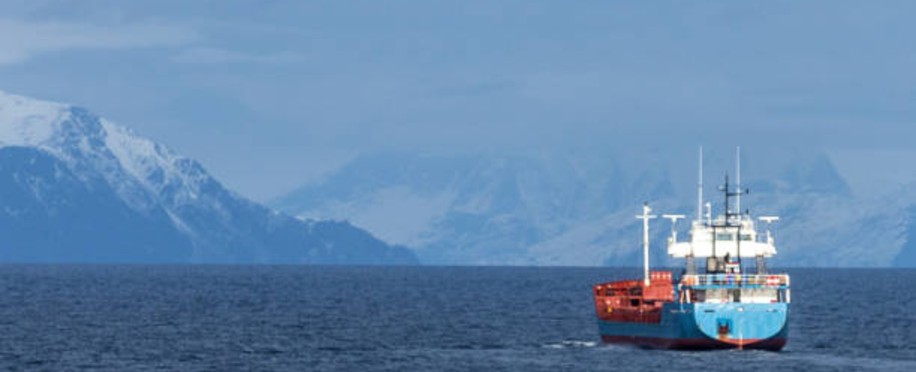
Over the past ten years, resource exploitation, environmental change, and growing economic interest have all contributed to a significant transformation in Arctic marine activities.
In 2025, Arctic vessel traffic hit a record high, as reported by the Arctic Council's Working Group on the Protection of the Arctic Marine Environment (PAME) via its Arctic Ship Traffic Data (ASTD) System.
Trends show that both increased shipping and a wider various vessel types were prevalent.
In comparison to 2013, when systematic tracking started, 1,812 distinct vessels entered the Arctic Polar Code area in 2025, a 40% increase. Regardless of several entries, "unique ships" are separate vessels that are counted once a year.
Moreover, the rise in maritime traffic is evidenced by a near doubling of vessel travel distance, with projections increasing from 6.1 million nautical miles in 2013 to 11.9 million nautical miles by 2025, driven by reduced Arctic Sea ice and longer navigation seasons.
September records the highest traffic for ships, with 1,060 vessels entering the region in September 2025, representing 58% of annual traffic.
At 40% of all Arctic entries, fishing vessels continue to be the most prevalent ship type. The largest gains are observed in vessels associated to industry and tourism, with general cargo ships coming in second:
Growth in Ship Types (2013–2025)
These changes are a result of both greater economic activity and increased interest in travel to the Arctic.
Shipping Training Courses in Dubai address Arctic operations by exploring environmental change, operational technologies, regulatory frameworks, and economic feasibility. Key subjects cover sea ice decline, the Polar Code, vessel winterisation, infrastructure challenges, and the commercial viability of new routes like the Northern Sea Route.

Environmental change is a key factor. Reduced sea ice and thinner multiyear ice have opened formerly inaccessible waters, allowing for longer and more consistent navigation seasons.
However, PAME Deputy Secretary Hjalti Hreinsson emphasises that resource extraction projects are the most powerful motivators. Two key developments demonstrate this trend:
The Mine has been operational since 2015 and utilises one of the world's finest iron ore resources. Its impact on shipping is significant.
Bulk carrier traffic in Baffin Bay has surged 540%. The distances sailed by bulk ships increased from 3,559 nautical miles in 2013 to 130,684 nautical miles in 2025.
The Yamal Gas Project altered Arctic tanker traffic:
Before 2018, petrol tankers were almost nonexistent. By 2025, there would be 40 unique LNG tankers operating in the Polar Code area.
Besides, fifteen specialised ice-class LNG boats have been built to provide year-round transportation to worldwide markets, including Asia.
These examples show how even a few industrial operations can significantly alter Arctic maritime patterns.
Accurate, real-time data is now crucial for maintaining navigation safety, safeguarding delicate ecosystems, and guiding wise policy decisions as Arctic shipping keeps growing.
PAME's Arctic Ship Traffic Data (ASTD) System gathers comprehensive data on ship movements, vessel types, and emissions across more than 400 Arctic ports. It monitors fuel consumption and seasonal traffic patterns, enhancing the understanding of evolving maritime activities in the region.
Furthermore, PAME is broadening its reporting to cover smaller vessels, cruise and passenger ships, fishing fleets, and disaster investigations. Upcoming ASTD upgrades will include detailed statistics for 500 Arctic ports and allow users to track vessels' final ports of call before entering the Arctic, improving transparency and research capabilities.
In Summary, the Arctic is undergoing a marked rise in maritime activity, including increased vessel numbers and industrial operations, highlighting its importance for global shipping. Continuous monitoring through systems like ASTD is essential for promoting responsible and sustainable growth in the region.
Read more news:


